What is Route Optimisation Software?
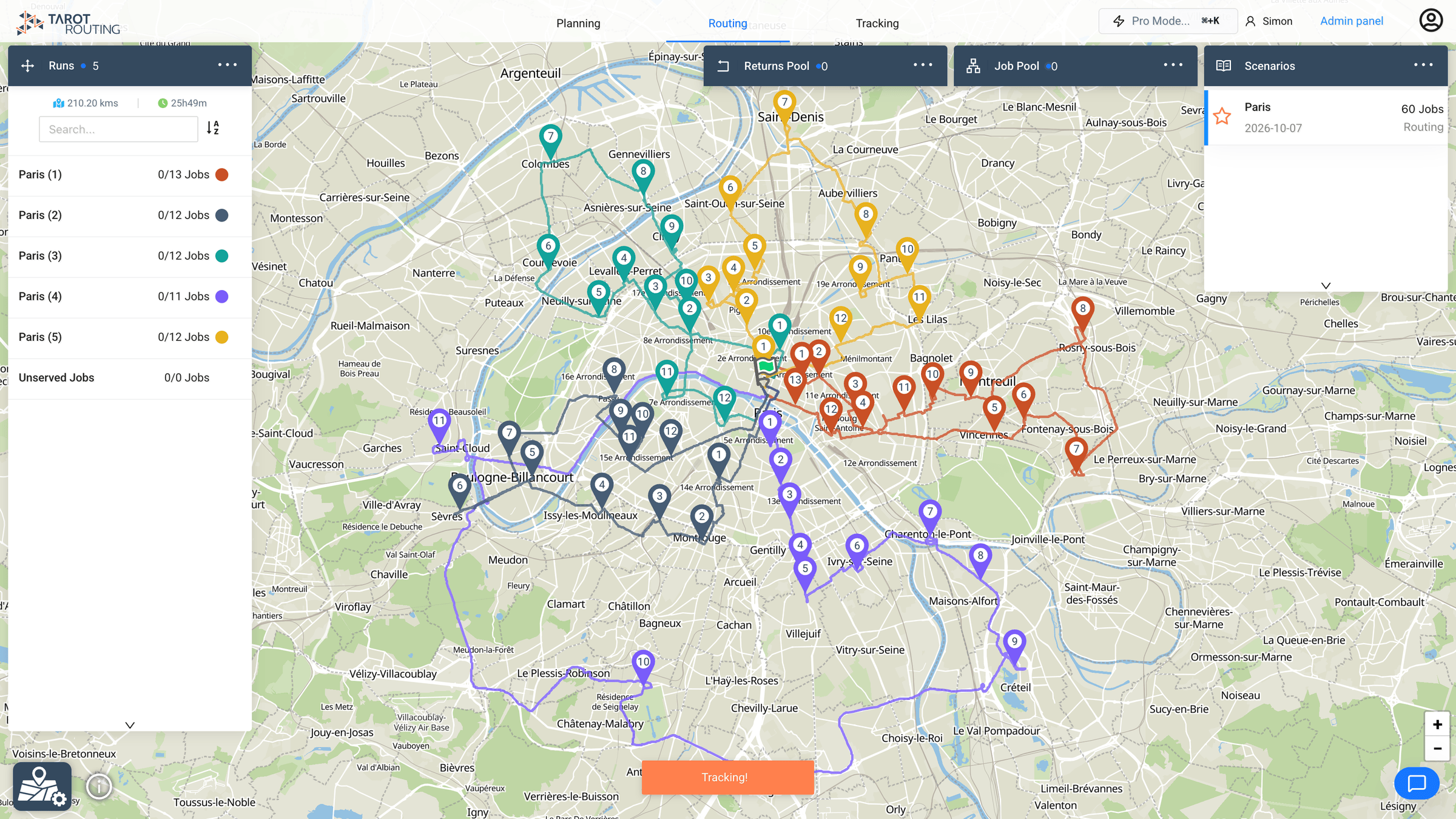
Route optimisation software uses advanced optimisation algorithms to automatically calculate the most efficient delivery routes for vehicle fleets while respecting real-world operational constraints.
​
Unlike GPS navigation or simple route planning tools, which provide directions from A to B, delivery route optimisation software plans entire fleets simultaneously. It evaluates all stops to be visited and balances factors such as:
-
Delivery time windows
-
Vehicle capacity limits
-
Vehicle types
-
Driver availability
-
Territory boundaries
-
Order priority
-
Traffic conditions
​​

For delivery and distribution fleets handling dozens, hundreds, or thousands of stops per day, manual planning or static routing quickly becomes inefficient. Routes may look reasonable on a map but fail to balance workload, minimise total distance, or meet delivery commitments.
Modern last-mile route optimisation software allocates and sequences jobs across multiple vehicles at once, reducing total kilometres travelled while improving on-time performance and fleet productivity.
​
The result is smarter route planning, better resource utilisation, and more predictable delivery operations.
How Tarot Route Optimisation Works.
Tarot’s route optimisation engine is designed for delivery and distribution operations at all scales. Combining advanced optimisation algorithms with practical operational controls, it enables planners to automate route generation while remaining firmly in command of execution. The result is efficient routes that work in the real world.
Intelligent Constraint Handling.
For every delivery wave, Tarot’s optimisation engine allocates and sequences jobs while respecting the operational rules that govern your business.
​
Optimising purely for shortest distance or driving time quickly breaks down when confronted with real-world complexity, especially when your deliveries involve:
-
Delivery time windows
-
Vehicle capacity limits (weight, volume, pallet count)
-
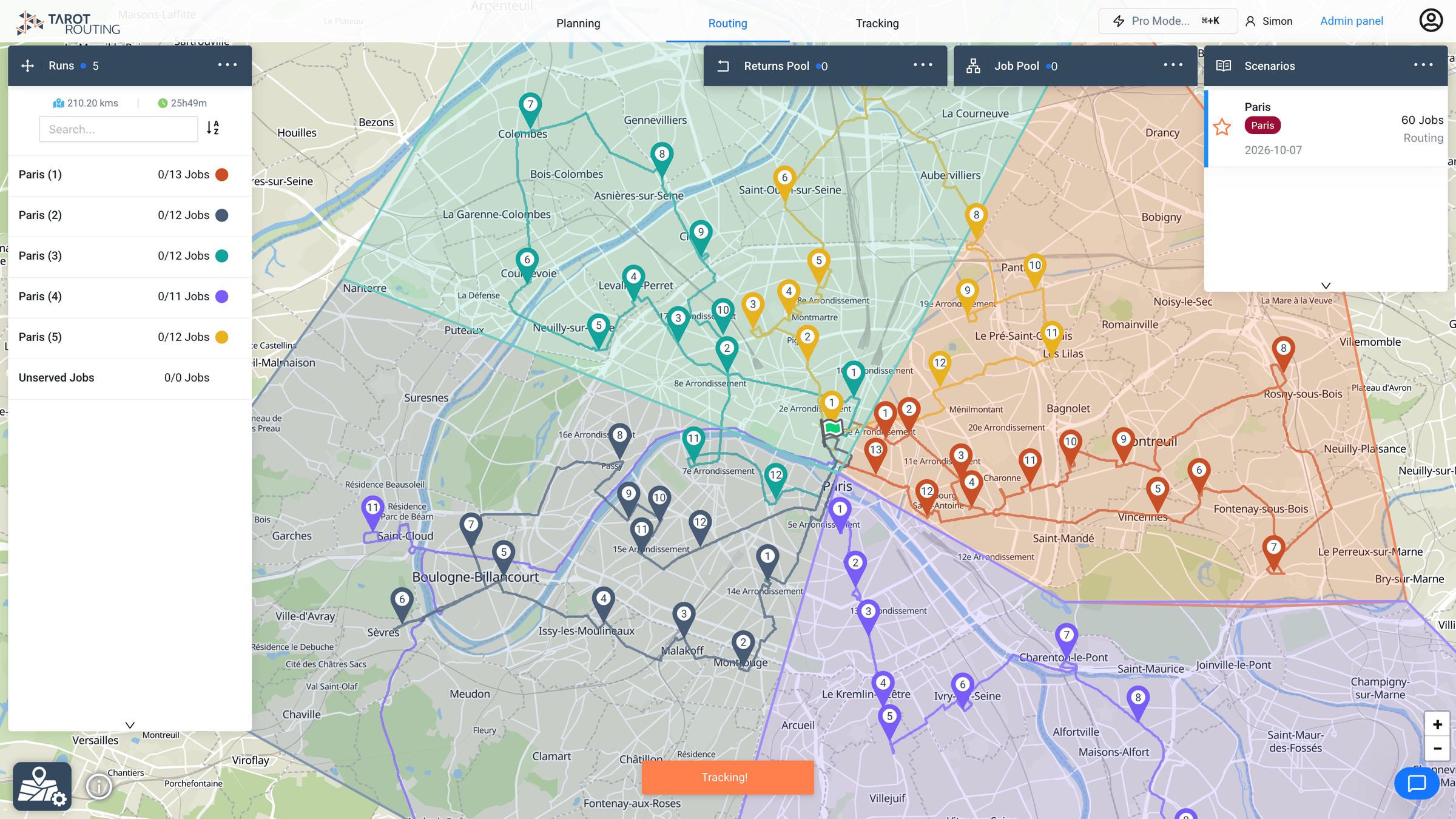
Territories or delivery zones
-
Driver skills or vehicle types
-
Order priority rules
-
Service-level commitments
​
Each constraint influences how jobs are assigned and sequenced across your fleet. The optimisation engine evaluates these constraints simultaneously, balancing efficiency with feasibility to produce routes that are mathematically optimised, operationally practical, and aligned with your service commitments.
​
Scenario-Based Planning with Human Control.
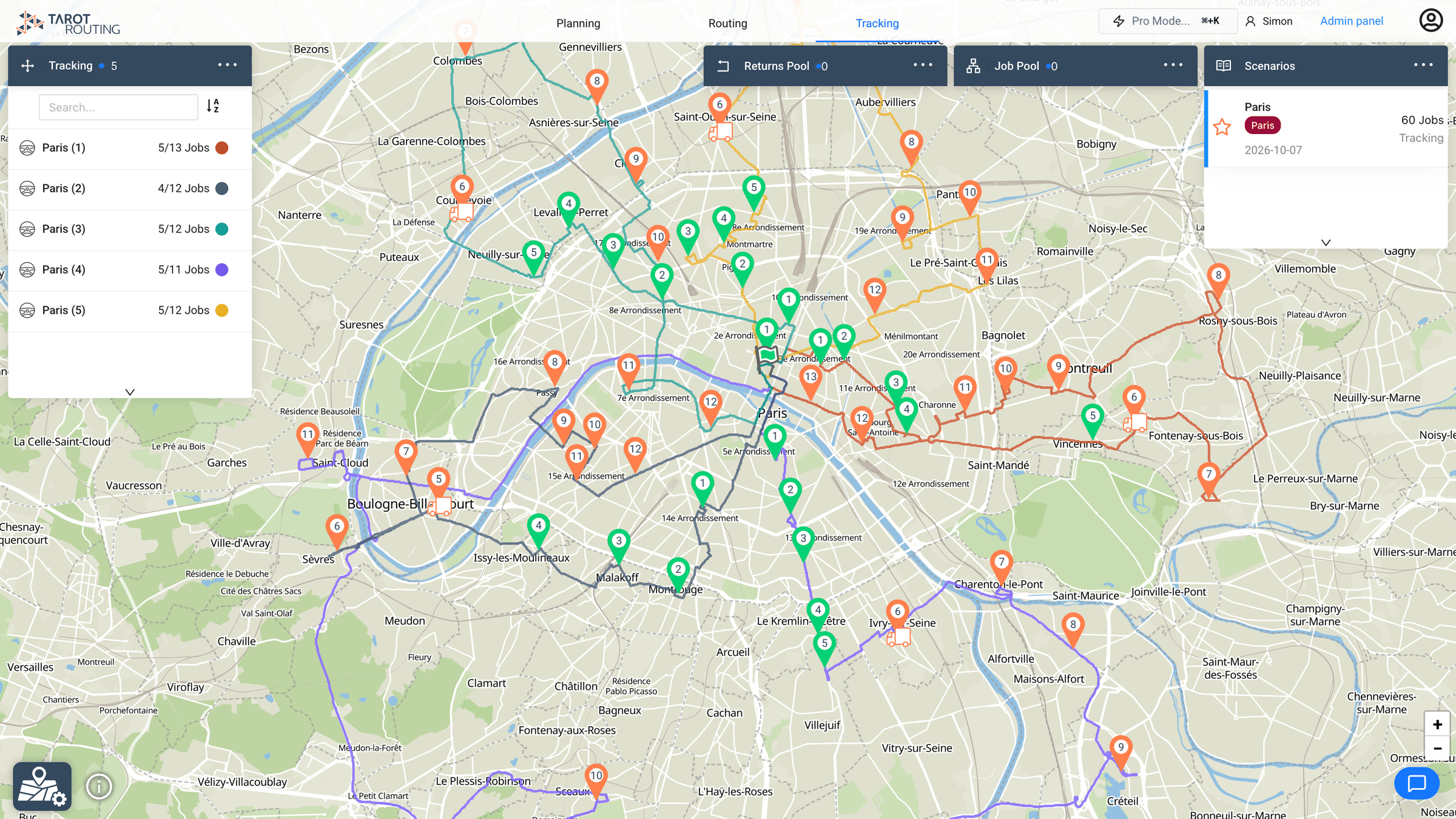
Delivery operations are dynamic. Orders arrive late, vehicles break down, customers reschedule, and priorities shift throughout the day.
​
Tarot uses a scenario-based planning workflow that allows teams to structure and manage these changes without compromising efficiency.
​​Planners can:
-
Create multiple delivery waves every day (for example AM and PM runs)
-
Upload and merge new jobs into an existing plan
-
Carry over unserved deliveries to the next scenario
-
Re-run optimisation as operational conditions change
​
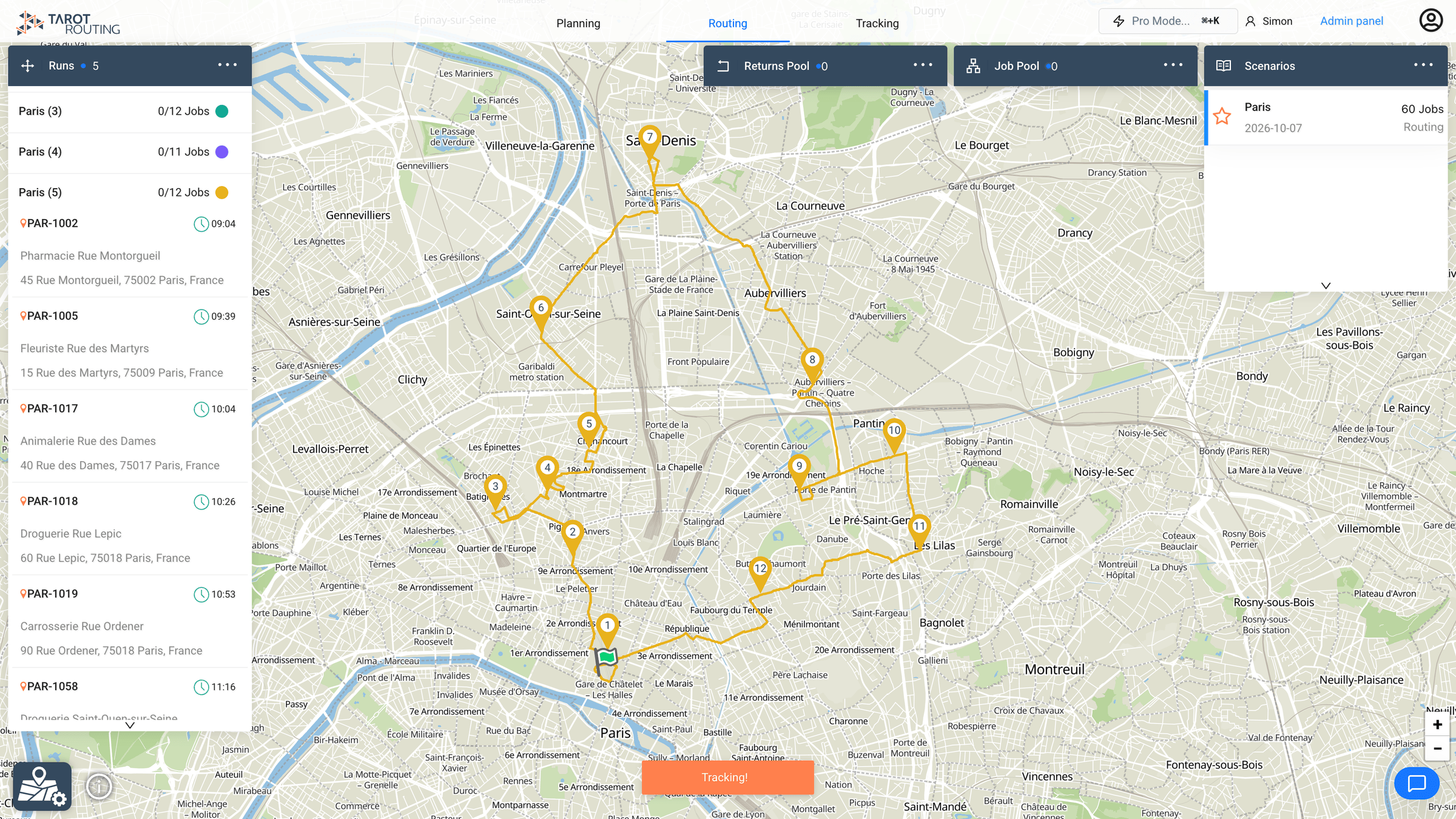
Once routes are generated, planners remain firmly in control. Adjustments can be made quickly using timeline-based drag-and-drop tools, ensuring operational judgement and planner experience complements algorithmic intelligence.​

Traffic-Aware Routing.
Accurate delivery planning depends on realistic travel time assumptions.
Tarot incorporates traffic-aware routing into its route optimisation calculations to produce delivery routes that reflect real-world driving conditions. Rather than relying solely on static travel times, or querying live traffic APIs millions of times during optimisation, the platform uses a hybrid data and machine learning approach to generate traffic-adjusted travel times instantly.
​
This allows the optimisation engine to plan traffic-aware routes quickly, so delivery plans can be generated in seconds without delaying dispatch or pushing back order cut-off times.
​
​👉 Learn how traffic-aware route optimisation works in our whitepaper, or read our overview of how Tarot models traffic in delivery operations.

Route Optimisation API.
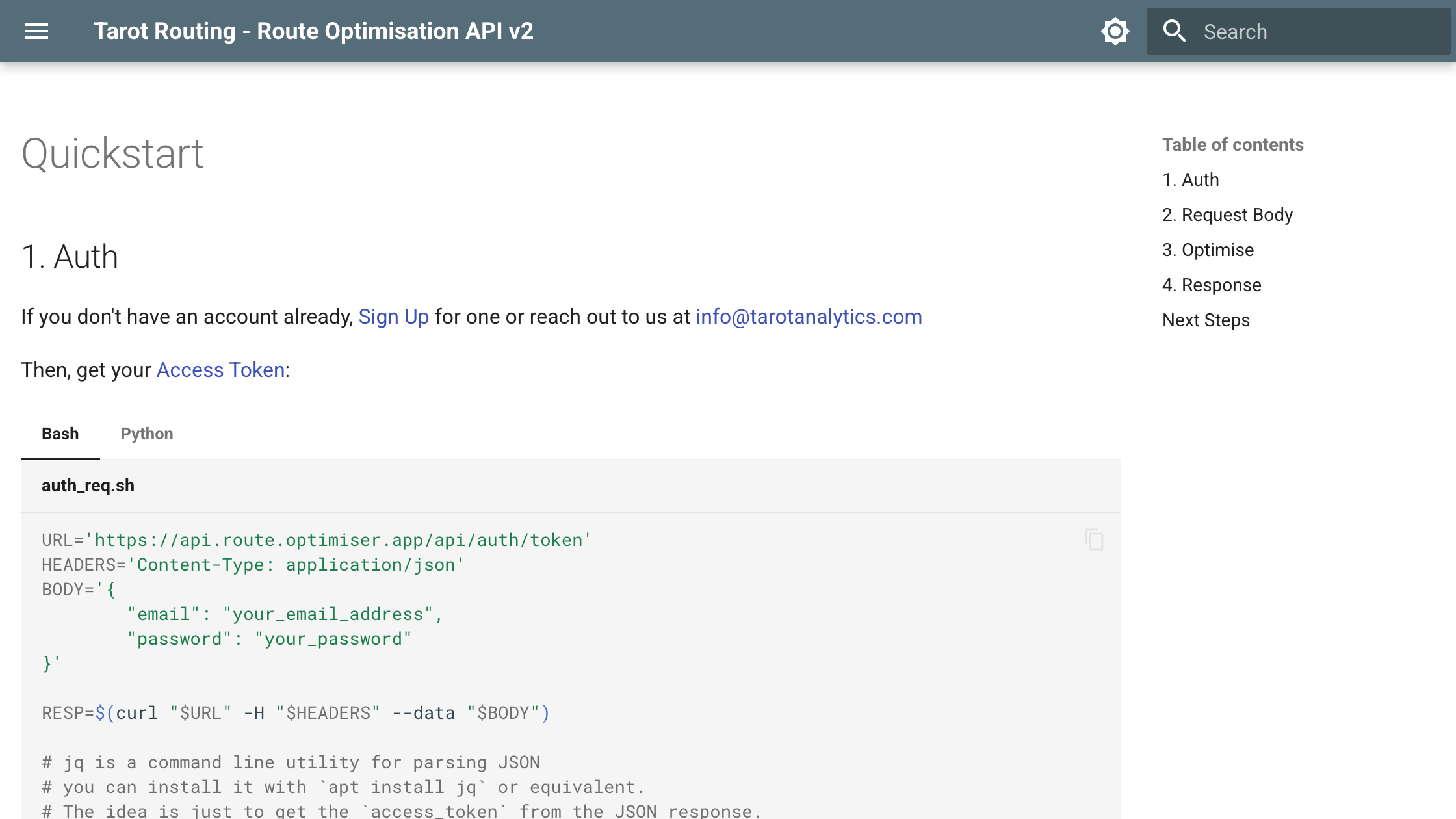
Tarot’s route optimisation engine can be accessed through the Tarot Routing interface or connected directly to your existing systems via API.
For organisations with established ERP, order management systems, or driver applications, jobs can be submitted programmatically to the optimisation engine, allowing route calculations to run within existing workflows without manual re-entry.
This gives technical teams the flexibility to integrate route optimisation into their operational stack while retaining access to Tarot’s optimisation capabilities.
​
Business Outcomes of Route Optimisation.
💰 Reduce Delivery Costs.
Optimised routes reduce the total kilometres driven across your fleet, lowering fuel consumption and vehicle wear.
.
More efficient routing helps minimise operating costs while maintaining delivery performance.
📦 Increase Stops Per Driver.
Smarter route sequencing allows drivers to complete more deliveries within the same working hours.
Higher delivery density improves fleet productivity without increasing fleet size.
🕓 Improve On-Time Delivery.
By respecting delivery time windows and accounting for real-world travel conditions, route optimisation improves schedule reliability.
More accurate planning leads to fewer missed delivery commitments.
🚚 Increase Fleet Utilisation.
Balanced route allocation ensures vehicles and drivers are used efficiently across the delivery network.
This helps fleets maximise the value of existing assets before adding additional vehicles.
Route Optimisation Software — Frequently Asked Questions.
What is Route Optimisation Software?
Route optimisation software automatically calculates the most efficient multi-stop delivery routes for fleets while respecting operational constraints such as delivery time windows, vehicle capacity limits, and driver availability. Unlike GPS navigation, which provides directions for a single journey, route optimisation plans and sequences deliveries across an entire fleet simultaneously.
How does route optimisation reduce delivery costs?
By reducing total kilometres travelled and improving delivery density, route optimisation lowers fuel consumption, reduces vehicle wear, and increases the number of stops completed per driver hour.
What is the difference between route planning and route optimisation?
Route planning typically focuses on a single journey from A to B. Tools such as GPS navigation or Google Maps can suggest the best route for one vehicle travelling between a small number of stops.
Route optimisation goes further by calculating efficient multi-stop delivery routes for an entire fleet simultaneously. Optimisation algorithms assign and sequence deliveries across multiple vehicles while respecting constraints such as time windows, vehicle capacity, and delivery priorities.
Can route optimisation software handle delivery constraints?
Yes. Modern route optimisation platforms can account for operational constraints such as delivery time windows, vehicle capacity limits, delivery territories, order priority, and service level commitments.
Advanced optimisation engines can also consider real-world travel conditions, such as time-of-day traffic, when calculating routes to improve delivery reliability.